There's something magical about transforming a bare evergreen into a festive masterpiece that becomes the centerpiece of your holiday celebrations. Whether you're working with a towering real tree or a compact artificial one, learning to design a christmas tree that reflects your personal style while incorporating current trends can elevate your entire holiday experience. From selecting the perfect color palette to arranging ornaments with intention, every decision contributes to creating a tree that tells your unique story. Let's explore how to bring your vision to life with practical techniques and creative inspiration that will make this year's tree your most memorable yet.
Understanding Your Christmas Tree Design Foundation
Before you hang a single ornament, successful tree design starts with understanding the fundamental elements that create visual harmony. The foundation of any well-designed tree includes selecting the right size for your space, choosing a cohesive color scheme, and determining your overall aesthetic direction.
Choosing the Right Tree Size and Shape
Your tree's dimensions should complement your room's proportions without overwhelming the space. Measure your ceiling height and subtract at least 12 inches to accommodate a tree topper and allow breathing room. For width, ensure you have enough clearance around the tree for ornaments and safe movement.
Consider these key measurements:
- Ceiling height minus 12-18 inches for your maximum tree height
- At least 3 feet of clearance on all sides for ornament depth
- Sturdy base space of 2-3 feet in diameter for stand and skirt
- Proximity to outlets for lighting convenience
The shape of your tree matters just as much as its size. Full, dense trees work beautifully for traditional styles with abundant ornaments, while sparser trees suit minimalist designs that showcase each decoration's individual beauty.
Establishing Your Color Palette
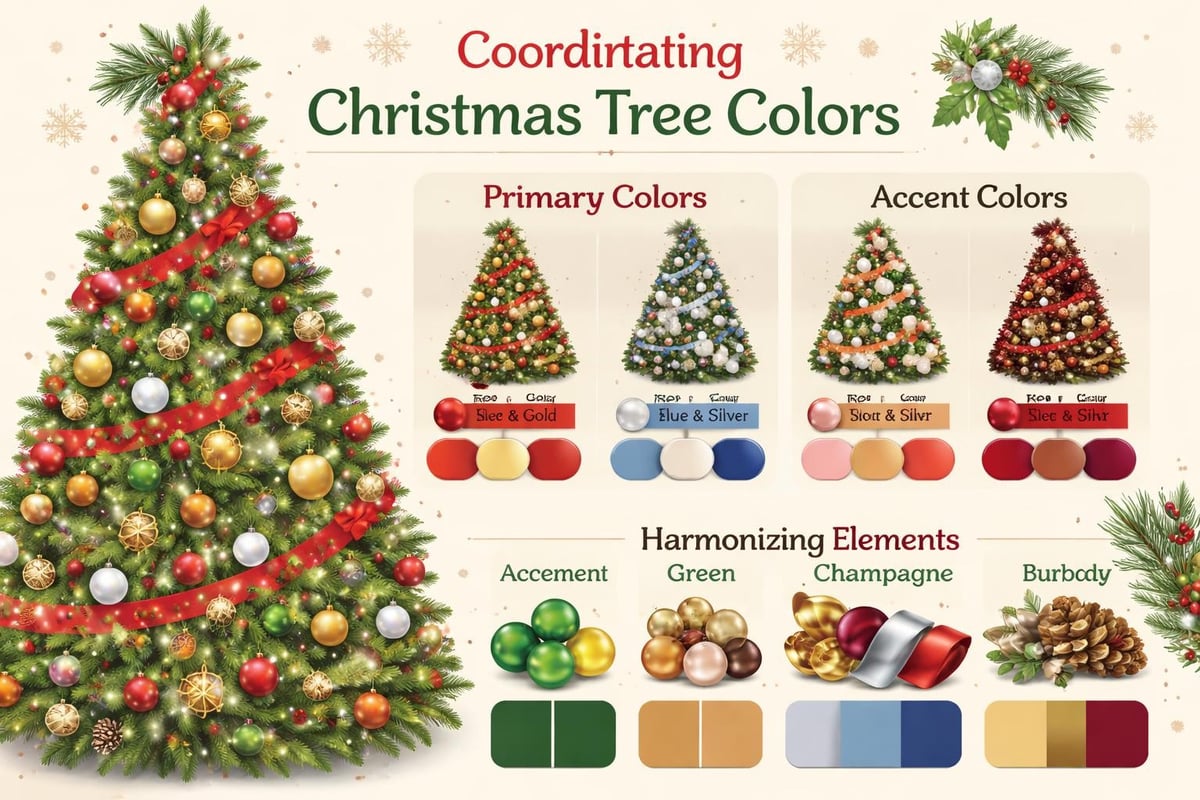
When you design a christmas tree, your color scheme sets the entire mood. Current trends show a fascinating shift toward both bold, nontraditional colors including pinks and teals and warm neutral palettes that create sophisticated elegance.
| Color Scheme | Mood Created | Best For |
|---|---|---|
| Classic Red & Gold | Traditional, warm, festive | Family-oriented homes |
| Silver & White | Modern, elegant, serene | Contemporary spaces |
| Jewel Tones | Rich, luxurious, dramatic | Formal living rooms |
| Pastels | Soft, whimsical, gentle | Bedrooms, nurseries |
| Natural Greens & Browns | Organic, rustic, calming | Farmhouse style |
Choose two to three primary colors and limit yourself to one or two accent colors. This restraint creates visual cohesion rather than chaotic clutter.
Lighting Your Tree for Maximum Impact
Lighting forms the foundation of your tree's ambiance and should be installed before any other decorations. The right lighting technique can transform an ordinary tree into an enchanting focal point.
Strategic Light Placement
Professional designers recommend using approximately 100 lights per foot of tree height. For an 8-foot tree, that's roughly 800 lights. However, designer David Lawson warns against over-lighting, suggesting a subtle glow creates more sophistication than excessive brightness.
Step-by-step lighting process:
- Start at the base of the tree near the trunk
- Weave lights in and out toward the tips of branches
- Create depth by placing some lights deeper within the tree
- Work in vertical sections rather than wrapping horizontally
- Test lights frequently to ensure even distribution
- Tuck excess cords toward the trunk
Warm white lights create a cozy, traditional atmosphere, while cool white lights offer a more modern, crisp appearance. For those seeking something different, multicolored lights bring playful energy, especially when working with vintage or eclectic themes.
Considering Alternative Lighting Approaches
The minimalist nearly naked tree trend emphasizes soft lighting with minimal ornaments, allowing the tree's natural beauty to shine. This approach works particularly well if you have an exceptionally beautiful tree with perfect symmetry.
If you're exploring unique design approaches, our guide on how to design offers additional creative inspiration for various projects throughout your home.
Ornament Selection and Placement Strategy
Once your lights are secured, it's time to design a christmas tree that showcases your ornaments in the most flattering arrangement. The key lies in understanding visual weight, scale, and intentional placement.
Working with Scale and Proportion
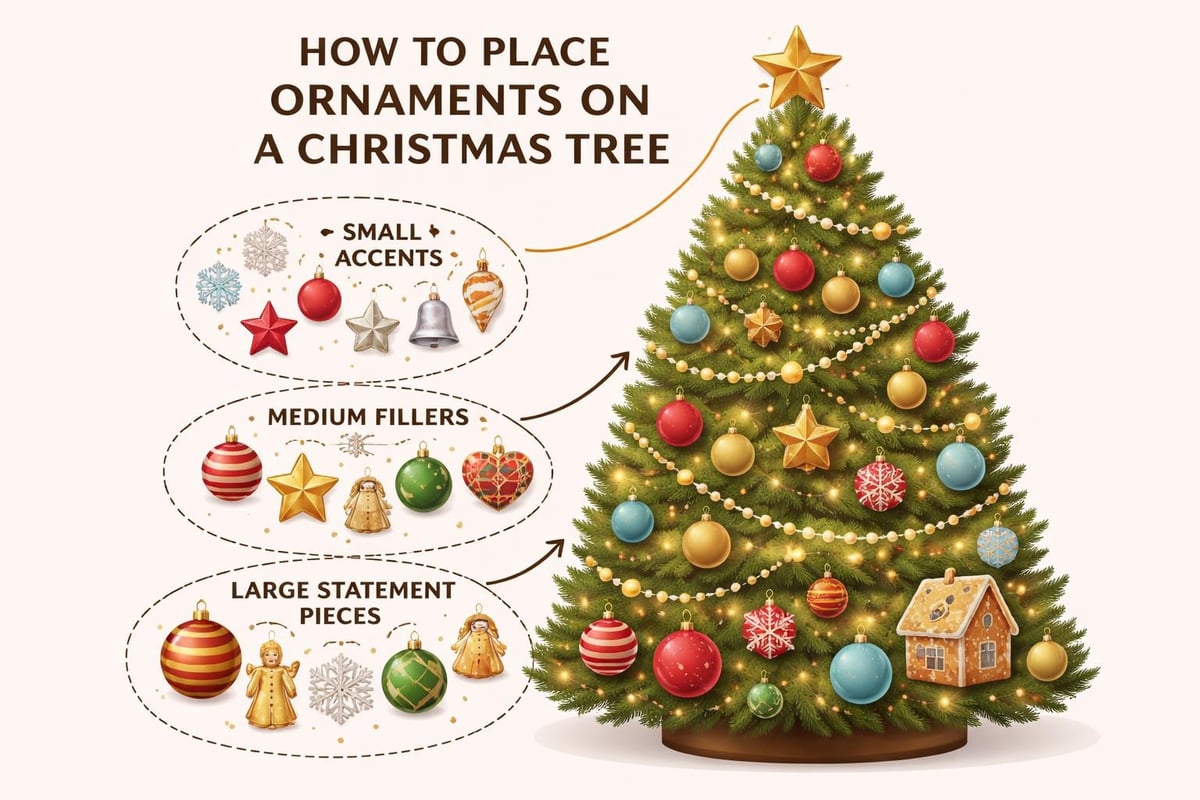
Oversized ornaments create dramatic impact and have become a defining trend for 2025. Large baubles anchor the design and draw the eye, while smaller ornaments fill spaces and add detail.
Ornament size distribution:
- Oversized (4-6 inches): 10-15% of total ornaments, placed strategically throughout
- Large (3-4 inches): 25-30% of total, distributed evenly
- Medium (2-3 inches): 40-50% of total, filling most spaces
- Small (1-2 inches): 15-20% of total, adding depth and detail
Begin by hanging your largest ornaments first, spacing them evenly around the tree. These serve as focal points that guide the overall composition. Place them at varying depths to create dimension, some closer to the trunk and others toward the branch tips.
Creating Visual Balance
When you design a christmas tree with balanced visual weight, step back frequently to assess your work from multiple angles. Heavy ornaments should be distributed throughout all sections to prevent bottom-heavy or lopsided appearances.
Consider creating small groupings or clusters of similar ornaments rather than scattering them randomly. This technique creates intentional moments of visual interest rather than chaotic decoration.
Incorporating Trending Design Elements
Staying current with design trends allows you to design a christmas tree that feels fresh while maintaining timeless appeal. The beauty of trends lies in selecting those that resonate with your personal aesthetic.
The Return of Bows and Ribbons
Bows have made a stunning comeback as versatile, affordable accents that work across various styles. From oversized statement bows as tree toppers to delicate ribbon cascades throughout the branches, this trend offers remarkable flexibility.
Ribbon application techniques:
- Vertical cascading: Cut 2-3 foot lengths and tuck them vertically throughout the tree
- Looping method: Create loops and secure them to branches for dimensional texture
- Bow clusters: Make multiple bows in varying sizes and group them together
- Tree topper statement: Crown your tree with an extravagant bow in your primary color
Wired ribbon holds its shape better than standard ribbon, making it ideal for creating structured bows and elegant draping.
Embracing Natural and Sustainable Elements
Nature-inspired sustainable decor continues gaining momentum as families seek eco-friendly alternatives to mass-produced ornaments. Incorporating organic elements creates warmth and connects your indoor celebration to the natural world.
Natural additions to consider:
- Dried orange slices threaded on twine
- Pinecones painted or left natural
- Cinnamon sticks bundled with raffia
- Fresh or preserved eucalyptus sprigs
- Wooden ornaments with minimal finish
These elements pair beautifully with the Scandinavian Splendor aesthetic, which combines natural materials with silver, white, and red accents for sophisticated simplicity.
Exploring Distinctive Style Approaches
Different design philosophies create dramatically different results when you design a christmas tree. Understanding various approaches helps you define and refine your personal style.
The Minimalist Nearly Naked Tree
This stripped-back approach focuses on the tree's inherent beauty rather than abundant decoration. Soft lighting and carefully selected minimal ornaments create an ethereal, sophisticated aesthetic that works particularly well in modern or Scandinavian-inspired spaces.
The veiled Christmas tree concept takes minimalism further by draping soft tulle over the tree with fairy lights, creating a sculptural art piece rather than a traditional holiday decoration.
The Maximalist Glamorous Approach
On the opposite end of the spectrum, maximalist trees embrace abundance with layers of ornaments, garlands, ribbons, and embellishments. Tinsel’s return to popularity, particularly sleek silver lametta and disco balls, offers opportunities for creating show-stopping glamour.
For maximalist success:
- Layer different textures (matte, glossy, glittery, metallic)
- Fill every visible space without leaving gaps
- Use multiple garland types for dimensional interest
- Incorporate unusual elements like feathers or crystals
- Create deliberate focal areas with clustering
The Heritage Classic Style
Nina Dobrev’s Ralph Lauren aesthetic demonstrates how heritage colors and understated decorations create timeless elegance. This approach works beautifully in traditional homes where the Christmas tree should complement rather than compete with existing decor.
Classic design emphasizes quality over quantity, with carefully curated ornaments in traditional reds, greens, golds, and creams. Plaid ribbons, tartan accents, and heirloom ornaments contribute to this enduring style.
Adding Final Touches and Tree Toppers
The finishing elements transform a decorated tree into a completed masterpiece. These final additions require as much consideration as your initial design decisions.
Selecting the Perfect Tree Topper
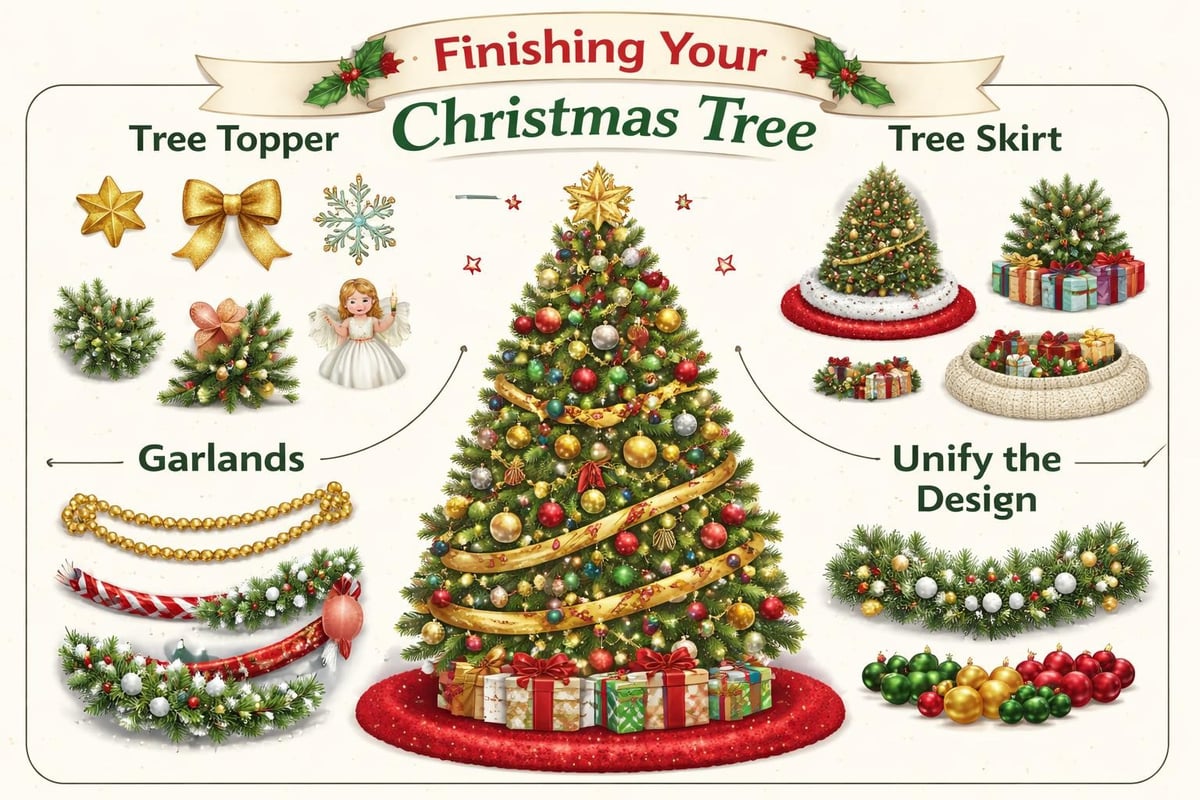
Your tree topper serves as the crown jewel and should harmonize with your overall design. Traditional stars and angels remain popular, but contemporary options include oversized bows, floral arrangements, or geometric sculptures.
| Topper Style | Best For | Height Needed |
|---|---|---|
| Classic Star | Traditional, family-friendly | 10-12 inches |
| Angel | Religious, sentimental | 12-15 inches |
| Oversized Bow | Trendy, glamorous | 15-20 inches |
| Floral Spray | Natural, organic | 8-12 inches |
| Geometric Shape | Modern, minimalist | 8-10 inches |
Ensure your topper is securely attached and proportionate to your tree size. An 8-foot tree can handle a larger, more dramatic topper than a 5-foot table tree.
Garland and Fill Materials
Garlands bridge visual gaps and add movement to your design. When you design a christmas tree with intentional garland placement, you create flow that guides the eye around the entire composition.
Garland options and techniques:
- Beaded garlands: Drape in swooping curves for traditional elegance
- Ribbon garlands: Weave vertically or horizontally for color continuity
- Natural greenery: Add fresh pine, cedar, or eucalyptus for texture and fragrance
- Popcorn or cranberry strings: Incorporate nostalgic, handmade charm
- Metallic chains: Create modern, reflective interest
Start garland application from the top and work downward, securing it periodically to branches. Vary the depth, sometimes placing garland deeper within the tree and sometimes at the tips.
The Tree Skirt and Base Presentation
Don't neglect the area beneath your tree, as it frames the entire presentation and conceals the utilitarian tree stand. The tree skirt or alternative base treatment should complement your design aesthetic.
For traditional settings, classic fabric tree skirts in coordinating colors work beautifully. For modern spaces, consider minimalist woven baskets, galvanized metal containers, or even stacked vintage books or crates.
If you enjoy crafting decorative elements, explore our how to make section for DIY projects that could inspire custom tree skirt creations or unique ornament ideas.
Arranging Presents Thoughtfully
The gifts beneath your tree contribute to the overall visual impact. Coordinate wrapping paper with your tree's color scheme for cohesive elegance. Stack presents at varying heights and depths to create visual interest rather than a flat, uniform wall of boxes.
Consider these presentation tips:
- Use 2-3 coordinating wrapping paper patterns maximum
- Add natural elements like fresh greenery to large packages
- Incorporate ribbon that matches your tree decorations
- Vary box sizes and shapes for dimensional interest
- Leave some floor space visible rather than completely covering it
Maintaining Your Tree Throughout the Season
A beautifully designed tree deserves proper care to maintain its appearance throughout the holiday season. Regular maintenance ensures your tree remains fresh, safe, and attractive.
Daily Care Essentials
For real trees, check water levels daily and add fresh water as needed. A well-hydrated tree stays fuller, retains needles better, and presents lower fire risk. Real trees can consume a gallon of water daily during the first week.
Artificial trees require different maintenance. Gently reshape branches that may have compressed during storage, and dust ornaments and branches weekly to maintain sparkle. Check light strands for burnt-out bulbs and replace them promptly.
Safety Considerations
Whether you design a christmas tree with real or artificial materials, safety must remain paramount. Keep trees away from heat sources, fireplaces, and radiators. Use only lights rated for indoor use, and never exceed the recommended number of connected light strands.
Safety checklist:
- Inspect all light strands before installation
- Turn off tree lights when leaving home or sleeping
- Keep fire extinguisher accessible
- Ensure smoke detectors are functional
- Keep tree hydrated (real trees)
- Secure tree to prevent tipping
For families with DIY interests, our collection of decorating ideas extends beyond Christmas trees to help you create cohesive holiday aesthetics throughout your entire home.
Adapting Trends to Your Personal Style
While staying informed about current trends helps you design a christmas tree that feels contemporary, the most successful trees reflect genuine personal style rather than slavish trend following. Use trends as inspiration, but always filter them through your unique aesthetic preferences.
Personalizing Trending Elements
Take the 2025 trend toward warm neutrals and adapt it to your situation. If you love the concept but prefer more color, incorporate warm neutrals as your base and add pops of your favorite jewel tones as accents.
The oversized bauble trend works beautifully when you select large ornaments that reflect your interests. Sports-themed families might choose oversized ornaments featuring beloved teams, while travel enthusiasts could display destination-themed large ornaments collected during adventures.
Creating Themed Sections
For those who can't commit to a single aesthetic, consider creating themed sections within your tree. Dedicate one area to sentimental family ornaments, another to trendy elements, and a third to handmade creations. This approach honors multiple aspects of your life while maintaining visual interest.
Theme integration works particularly well on larger trees where distinct sections don't compete but rather create a rich, layered narrative. Transition gradually between themes using your color palette as the unifying thread.
Budget-Friendly Design Solutions
You don't need unlimited resources to design a christmas tree that looks professionally styled. Strategic investments and creative DIY approaches deliver impressive results without straining your budget.
Prioritizing Your Spending
Invest in quality lights and a few statement pieces, then fill in with affordable ornaments and DIY elements. Good lighting lasts years and forms the foundation of every design, making it worthy of higher investment.
Budget allocation strategy:
- 40% on quality lights that will last multiple seasons
- 25% on 5-10 statement ornaments in your color scheme
- 20% on natural or DIY elements like ribbons and greenery
- 15% on fill ornaments from budget-friendly sources
Thrift stores, estate sales, and after-Christmas clearances offer tremendous opportunities for finding unique ornaments at fraction of retail prices. Vintage ornaments add character and often surpass new mass-produced options in quality and charm.
DIY Ornament Ideas
Creating handmade ornaments adds personal meaning while reducing costs. Simple projects like salt dough ornaments, painted pinecones, or fabric scrap garlands involve minimal expense but deliver maximum personality.
For families seeking creative projects, making custom ornaments becomes an annual tradition that generates both decorations and memories. Children particularly treasure ornaments they've created, and these handmade pieces often become the most cherished items on the tree.
Our guide on how to make a tree out of construction paper offers techniques that could translate into unique ornament designs or complementary decorative elements for your space.
Troubleshooting Common Design Challenges
Even with careful planning, you may encounter obstacles when you design a christmas tree. Understanding common issues and their solutions saves frustration and delivers better results.
Addressing Visual Imbalance
If your tree appears lopsided or bottom-heavy, redistribute your largest ornaments more evenly throughout all sections. Often, we unconsciously place heavier items lower, creating unintended visual weight at the bottom.
Step back frequently and view your tree from multiple angles. What looks balanced from the front may appear sparse from the side. Walk around your tree during the decorating process, making adjustments to ensure 360-degree appeal.
Managing Sparse or Bare Spots
Real trees sometimes have gaps or sparse areas that create challenges. Rather than forcing ornaments into these spaces, embrace them strategically:
- Fill gaps with greenery picks or floral stems
- Use garland to disguise thin areas
- Position the sparse side toward a wall
- Create intentional negative space as part of minimalist design
- Add branch extenders for structural solutions
Artificial trees with adjustable branches allow you to manually create fuller appearances by spreading branches and fluffing individual tips.
Designing a stunning Christmas tree combines artistic vision with practical technique, allowing you to create a festive centerpiece that reflects your personal style while incorporating current trends. Whether you embrace maximalist glamour or minimalist elegance, the key lies in thoughtful planning, quality materials, and layered details that work together harmoniously. Ready to transform your holiday decorating skills beyond just the tree? Decoratehow offers endless inspiration, creative hacks, and practical tips for making every space in your home and garden more beautiful and welcoming all year long.